
The Largest Annual Gathering on Gender Equality
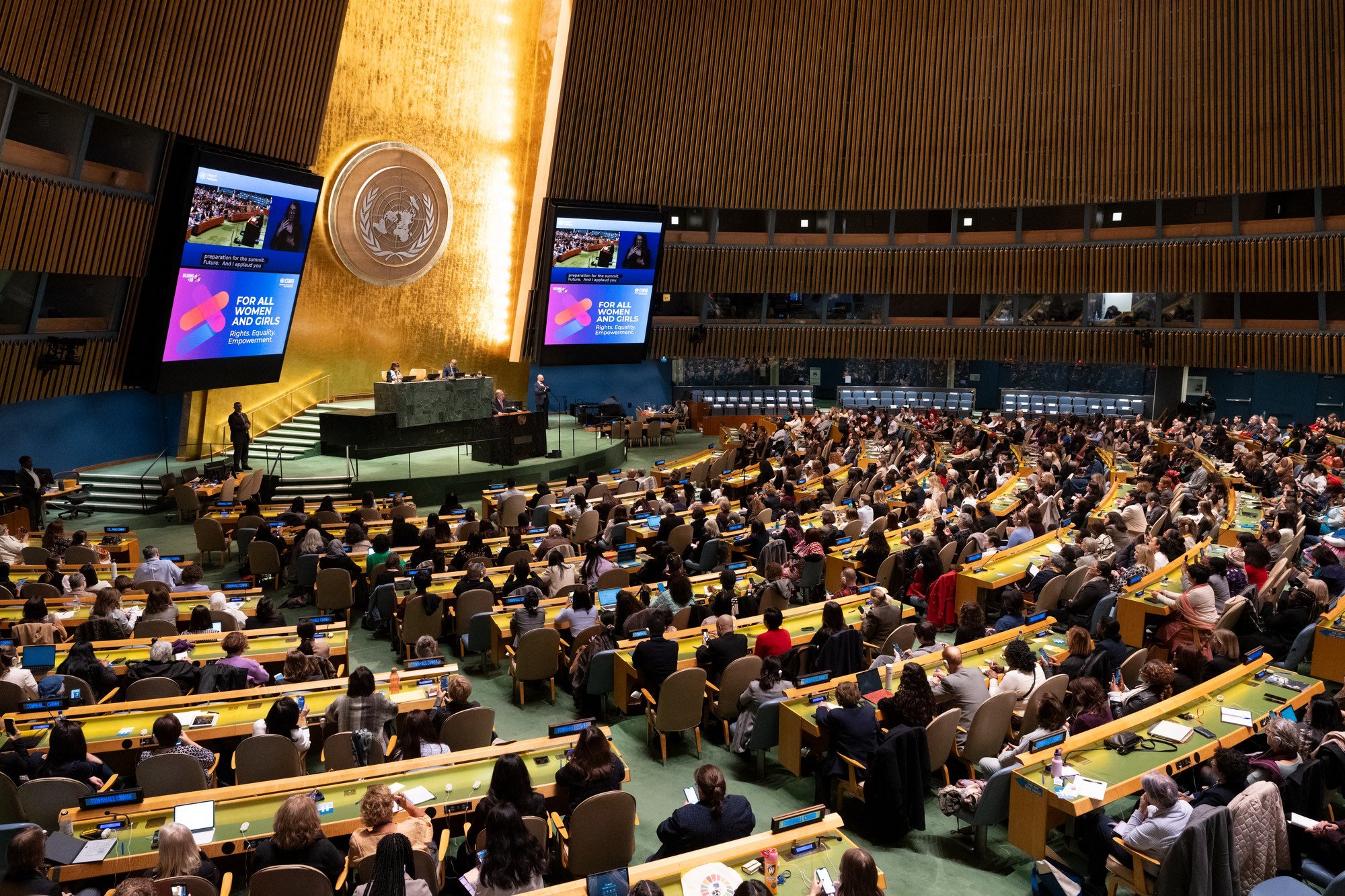
Civil society leaders gather at a town hall meeting during the 69th Session of the Commission on the Status of Women in 2025. Photo: UN Photo / Evan Schneider
Every March, thousands of activists blaze a trail to New York City for the largest annual gathering on gender equality: the United Nations Commission on the Status of Women (CSW). For two weeks, the basement of UN Headquarters is vibrant with women, men, and allies from all over the world strategizing over coffee in the wee hours of the morning or pizza late at night. Civil society advocates linger in the hallways, hoping to catch government representatives between meetings to share their feedback on negotiations. Meanwhile, outside the building, hundreds of informative and celebratory events take place across New York City.
The Commission on the Status of Women is officially the primary global intergovernmental body dedicated to promoting gender equality and the empowerment of women. It is also an important forum that brings together a diverse, global group — UN Member State representatives, UN entities, civil society organizations, academia, and the private sector — every year to discuss progress and gaps in the implementation of gender equality commitments, address emerging issues, and set global standards and agreements.
The history of the CSW is deeply interwoven with the history of the World Conferences on Women and the history of the UN itself. In honor of its 70th anniversary in 2026, we are putting a spotlight on this rich history.
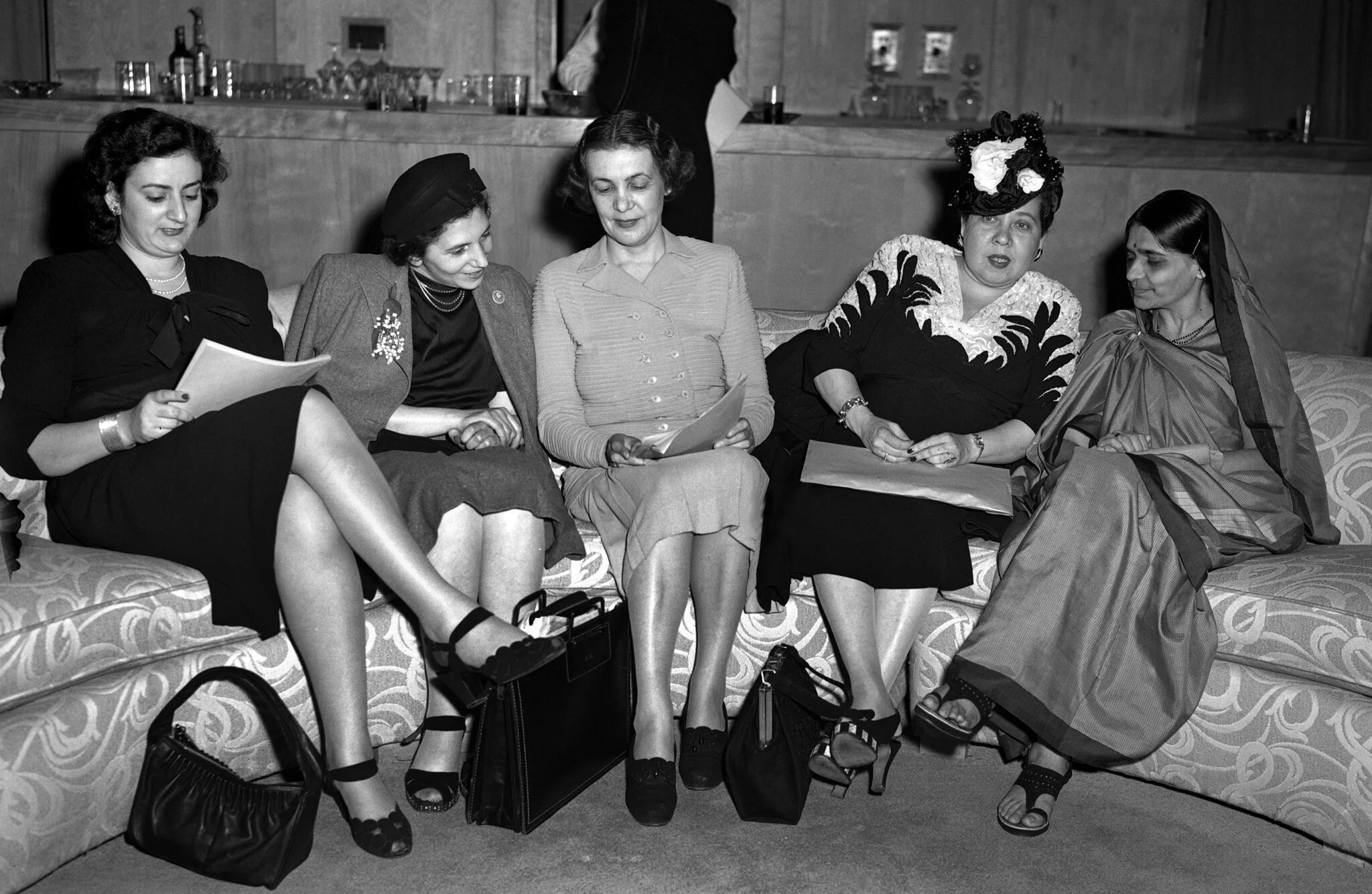
Delegates of the Sub-commission on the Status of Women prepare for a press conference at their meeting in 1946. From left to right are: Miss Angela Jurdak, Lebanon; Miss Fryderyka Kalinowski, Poland; Mrs. Bodgil Begtrup, Denmark and Chairman of the committee; Miss Minerva Bernardino, Dominican Republic; and Mrs. Hansa Mehta, India. Photo: UN Photo
Gender Equality as an Early Priority of the United Nations (1946)
The CSW was established in 1946, a year after the founding of the United Nations. It is a political body, composed of UN Member States, with a mandate to promote “women’s rights in political, economic, civil, social and educational fields” and to make recommendations on “urgent problems requiring immediate attention in the field of women’s rights.”
The Commission first met in February 1947 at Lake Success, New York. All 15 government representatives were women, from nearly every continent:
First CSW Government Representatives
Jessie Mary Grey Street, Australia
Evdokia Uralova, Byelorussian Soviet Socialist Republic
Way Sung New, China
Graciela Morales F. de Echeverria, Costa Rica
Bodil Begtrup, Denmark
Marie Helene Lefaucheux, France
Sara Basterrechea Ramirez, Guatemala
Begum Shareefah Hamid Ali, India
Amalia C. de Castillo Ledon, Mexico
Alice Kandalft Cosma, Syria
Mihri Pektas, Turkey
Elizavieta Alekseevna Popova, Union of Soviet Socialist Republics
Mary Sutherland, United Kingdom
Dorothy Kenyon, United States
Isabel Urdaneta, Venezuela
From the beginning, the CSW had close relationships with nongovernmental organizations. Representatives of several international women’s organizations addressed the Commission at its first meeting, and in all future CSWs, NGOs were invited to participate as observers. As a result, the CSW has always been a critical venue for advocacy where NGOs can push forward their agenda and be in direct contact with governments.
“In no organ of the UN do international NGOs play a more active and influential role than in the Commission.”
— Fraser and Tinker, 2004
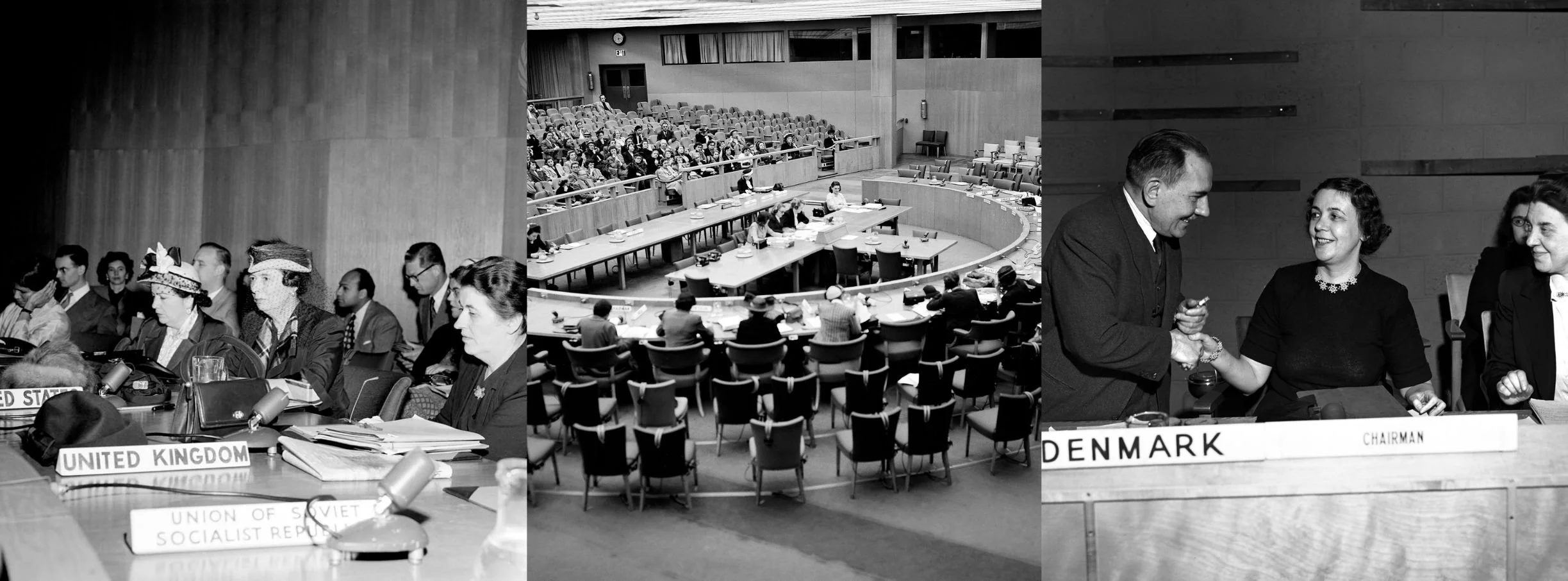
Delegates attend early sessions of the Commission on the Status of Women. Photo: UN Photo
Establishing an International Legal Foundation for Women’s Rights (1947 - 1963)
Between 1947 and 1963, the Commission focused on establishing the legal basis for women’s rights at the international level, laying the foundation of the global gender equality agenda. The Commission influenced the drafting of the Universal Declaration of Human Rights, successfully advocating against the word “men” as a synonym for all of humanity. The CSW also drafted many key conventions on women’s rights, including political rights, such as the right to vote, run for office, and hold public office, along with marriage rights and the right to equal pay.
In 1967, the General Assembly adopted the Declaration on the Elimination of Discrimination against Women, which was drafted by the CSW. International declarations are not legally binding, however, so the Commission developed what would be considered the most important human rights treaty for women and girls: the Convention on the Elimination of All Forms of Discrimination against Women (CEDAW). CEDAW was adopted by the General Assembly in 1979 and has been ratified by 189 countries.
Expansion of the Role of Women in Development (1960s - 1970s)
In the 1960s and 1970s, the United Nations experienced a surge in membership and diversity when several newly independent countries joined as Member States. During this period, the Commission focused its efforts heavily on the role of women in development, “both as beneficiaries and agents of change.” This included a broad agenda of women’s needs in community and rural development, agricultural work, family planning, and the impact of scientific and technological advances.
Building on the Momentum of a Global Movement for Women’s Rights (1970s - 1980s)
To commemorate its 25th anniversary in 1972, the Commission recommended that the UN General Assembly designate 1975, the 30th anniversary of the UN, as International Women’s Year. In addition, the General Assembly designated 1976–1985 as the UN Decade for Women, catalyzing increased global advocacy for women’s rights. This led to four World Conferences on Women. The first three were held in Mexico City (1975), Copenhagen (1980), and Nairobi (1985), each progressively building the global gender equality agenda and the global women’s movement. In 1987, the Commission began to meet annually at UN Headquarters in New York City, solidifying the CSW as a key player in the UN’s annual drumbeat of events.
Beijing and Beyond (1990s)
Until the mid-1980s, the topic of violence against women was seen as a “home issue” and not for state involvement. Alongside women’s human rights advocates, the Commission continued to elevate the topic of violence against women on the international stage, culminating in the Declaration on the Elimination of Violence against Women in 1993.
The CSW played a critical facilitation role in the lead-up to and follow-up from the Fourth World Conference on Women, which was held in Beijing in 1995. The Commission is the UN body responsible for monitoring the implementation of the Beijing Declaration and Platform for Action which remains the most consequential intergovernmental agreement on women’s rights to date.
The CSW also played a key role in the 2000 adoption of the landmark Security Council Resolution 1325 on Women, Peace and Security, which recognized women as not just victims of conflict, but key actors in conflict prevention, peace negotiations, peacekeeping efforts, and post-conflict reconstruction. The critical role of women’s NGOs in the resolution is said to have originated in a 1998 CSW meeting that was dedicated to following up on the Beijing Platform for Action’s conclusions on women and armed conflict.
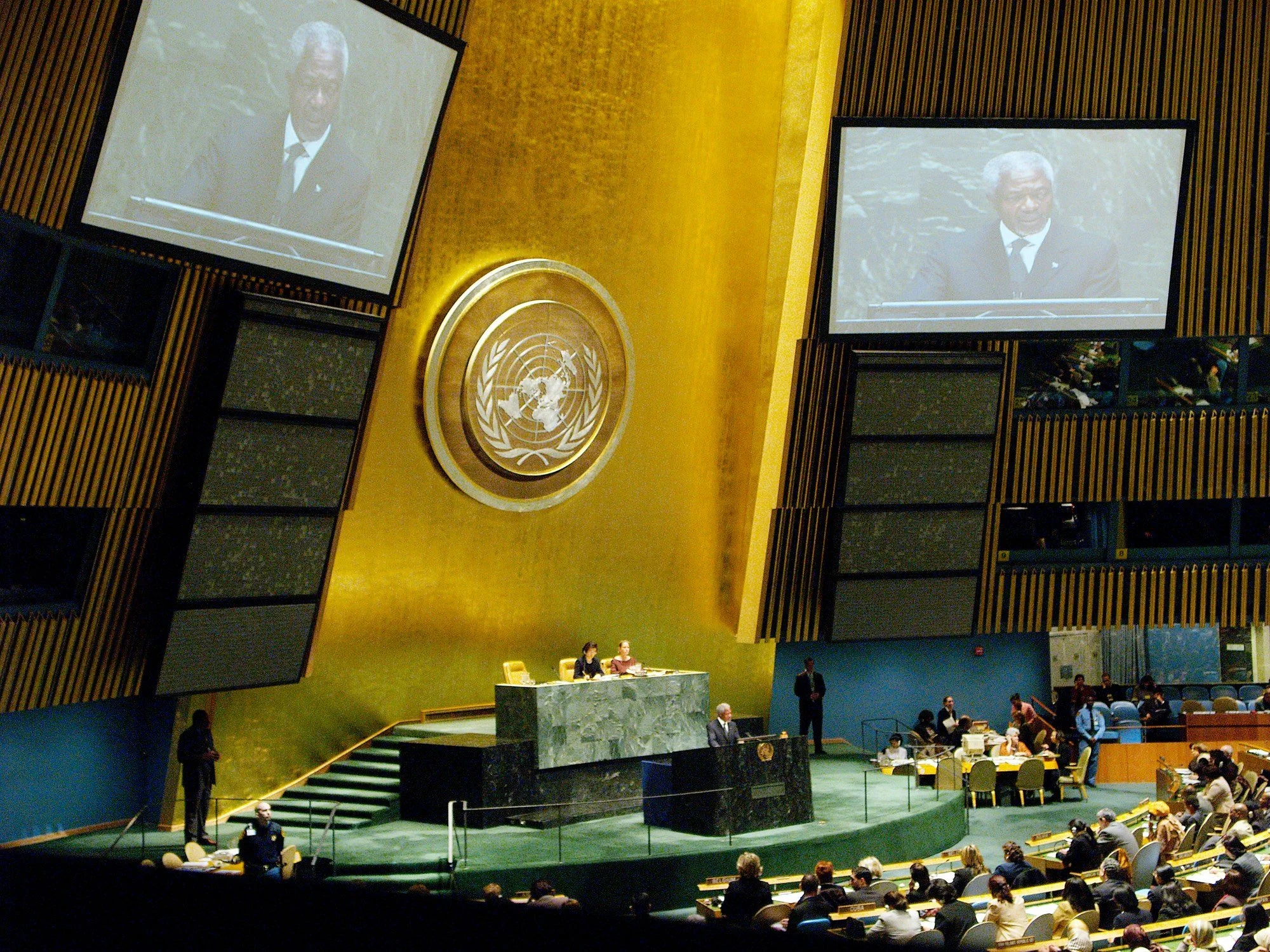
Secretary-General Kofi Annan delivers introductory remarks at the opening of the 49th session of the Commission on the Status of Women. Photo: UN Photo / Mark Garten
A Revitalized Commission (Present Day)
In 2025, more than 13,000 participants — including 5,845 NGO representatives — engaged in the 69th Commission on the Status of Women. Activists consistently point to the CSW as one of the few global platforms and intergovernmental spaces that enables strategizing and collaboration between feminist and women’s rights organizations and engagement with governments on gender equality policy discussions.
Each CSW has a primary theme that serves as the focus for official negotiations among governments. Most CSWs conclude with an outcome document known as Agreed Conclusions, which governments produce and adopt by consensus. Additional events take place during the CSW, both inside and outside of UN Headquarters, often revolving around the primary theme for that session. CSW’s primary theme this year is ensuring and strengthening access to justice for all women and girls.
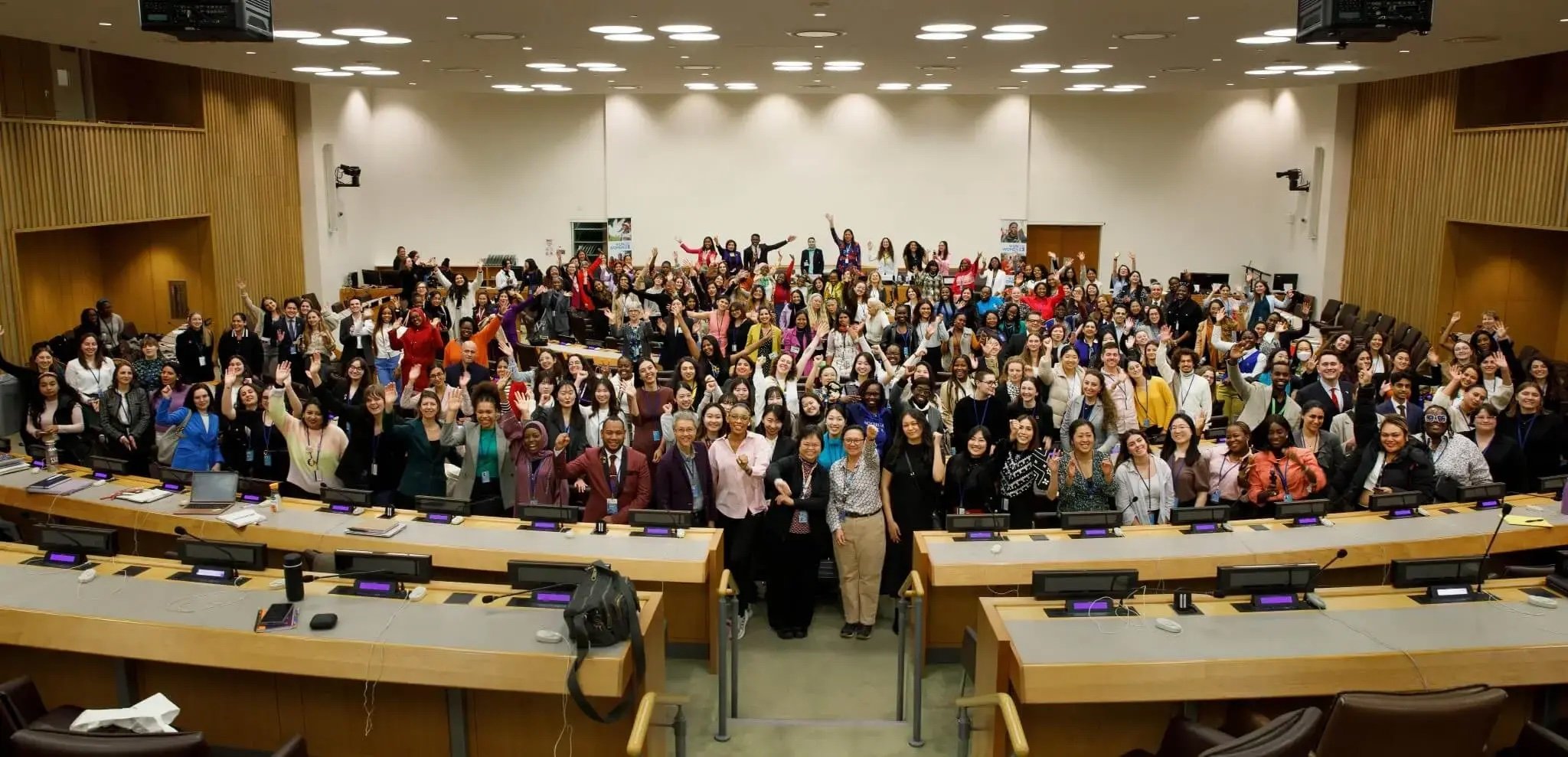
Young leaders come together during the 68th Commission on the Status of Women. Photo: UN Women / Ryan Brown
CSW70 marks the first meeting of the Commission since Member States adopted measures in September 2025 to strengthen and revitalize the Commission. These include more opportunities for civil society organizations to share their insights on the priority theme; shorter, action-oriented and time-bound Agreed Conclusions; a rotating location for the Commission’s review sessions held every five years; and annual high-level meetings on critical topics concerning women and girls.
From its origins to its revitalization, the CSW remains the forum for advocates — from civil society organizations to government representatives — to advance the global gender equality agenda and come together in community.
To get involved in this year’s CSW, which is scheduled March 9 - 19, you can:
Track official government discussions via UN Web TV.
Review the public schedule of CSW official side events.
Visit NGO CSW’s website and register for in-person and virtual events during the NGO CSW Forum, a parallel but separate process organized by and for global civil society to connect them with the official CSW process.